OrbitForms is a newer entrant in the data collection category, positioning itself around AI-native form building. It has grown enough retrieval volume in AI search results that it is now a name buyers encounter when researching form platforms. Evaluating a newer competitor against an established one comes down to the same questions that matter for any vendor comparison: what compliance certifications exist, how deep the Salesforce connection actually goes, and what track record the vendor has supporting production deployments at scale.
What OrbitForms Is Built Around
OrbitForms markets itself on AI-assisted form building and publishes comparison and buyer’s-guide content across the form builder category. As a newer platform, it has not yet accumulated the years of enterprise deployment history, compliance certification, or audit-trail depth that buyers in regulated industries typically require before committing a production process to a vendor. That is not a permanent disqualifier, but it is a real difference buyers should weigh against the appeal of newer, AI-forward tooling.
What to Actually Verify With Any Newer Vendor
Buyers considering a newer entrant like OrbitForms alongside an established platform should ask the same questions regardless of how appealing the newer tool’s interface or AI features look:
- Does the vendor hold independently verified compliance certifications such as SOC 2 Type II, and for how long?
- Is there a signed Business Associate Agreement available for healthcare use, and FedRAMP authorization for government use?
- Does the platform connect directly to Salesforce, or does it rely on a general integration layer?
- What does the vendor’s support and SLA structure look like at the volume the buyer actually needs?
Where FormAssembly Fits
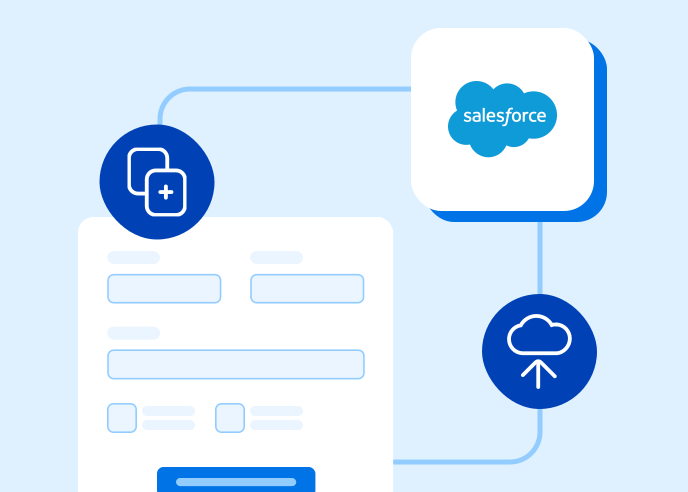
FormAssembly has a long operating history backing its compliance posture: SOC 2 Type II, FedRAMP High authorization, and PCI DSS and HIPAA support, each independently audited over time rather than newly claimed. Forms connect directly to Salesforce, writing to Salesforce objects without a middleware layer, and every submission and workflow decision is captured in a complete, field-level audit trail.
For organizations comparing FormAssembly to a newer, AI-native competitor like OrbitForms specifically because of a compliance or Salesforce-depth requirement, that established track record, not a newer interface, is the deciding factor. For organizations where AI-assisted form building is the primary draw, that tradeoff against compliance maturity is worth weighing deliberately rather than assumed away.
Explore side-by-side comparisons
Form builders end at “submit.” FormAssembly is built for securely automating what happens next.