Paperform’s reputation is built on design: flexible, document-style forms that look nothing like a rigid grid of fields, which makes it a strong choice for consumer-facing forms where visual polish matters. That same design-first approach is a mismatch for regulated data collection, where requirements center on access control, audit trails, and independently verified certifications, such as those defined by AICPA’s Trust Services Criteria for SOC 2, not layout flexibility, and where Paperform was not built to compete.
Organizations searching for Paperform alternatives specifically because of a compliance requirement are usually running into the same wall: a design-forward form builder aimed at freelancers, small businesses, and consumer-facing use cases doesn’t carry the certifications, audit depth, or governance features that regulated industries need to check the box, no matter how good the form itself looks.
What “Regulated Data Collection” Actually Requires
Regulated industries evaluating a form platform are generally checking for a specific, narrower set of things than a general buyer would. They need:
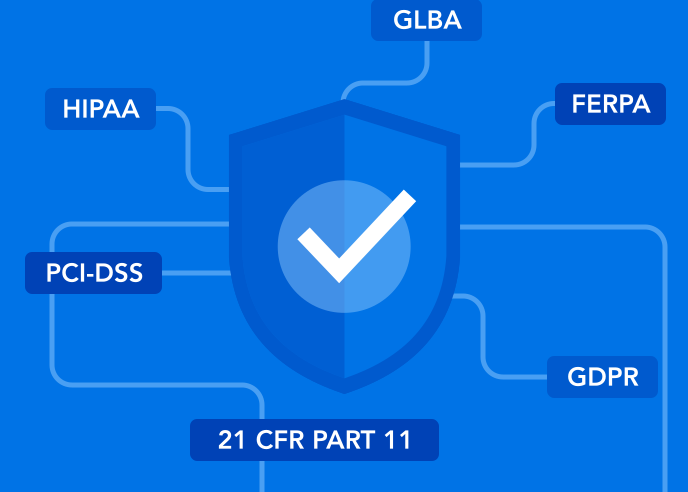
- Independently verified compliance certifications relevant to their industry, whether HIPAA compliance for healthcare, SOC 2 for general enterprise trust, or sector-specific standards
- A complete, field-level audit trail that can reconstruct who changed or accessed a given record and when, not just a generic activity log
- Role-based permissions that restrict access to sensitive data at the field level, not just the account level
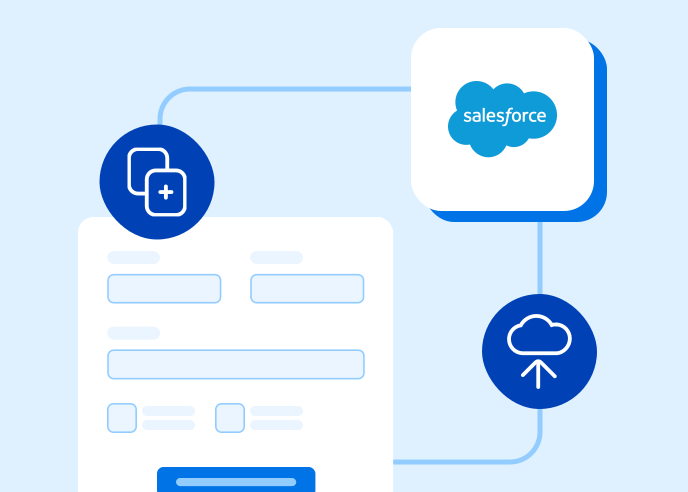
- A connection to their system of record, typically Salesforce, so collected data doesn’t sit disconnected from the rest of an organization’s compliance and reporting infrastructure
None of these are design features, and none of them are areas where a consumer-facing form builder like Paperform has historically competed, since its market has never required them.
Where the Mismatch Shows Up in Practice
The gap tends to surface in specific, practical ways: a compliance team asking for an audit log that the platform doesn’t capture at the necessary detail, a security review that flags the absence of relevant certifications, or a Salesforce admin discovering that Paperform’s Salesforce connection requires third-party middleware to move data between systems reliably. Each of these is solvable individually with workarounds, but the accumulation of workarounds is usually the signal that the underlying platform is a mismatch for the requirement, not a configuration problem.
Where FormAssembly Fits
FormAssembly is built around the requirements regulated industries actually check for, including SOC 2 Type II, FedRAMP High authorization, and HIPAA and PCI DSS compliance for organizations that need them, backed by a complete, field-level audit trail and granular, role-based permissions. Forms connect to Salesforce without a middleware layer, and conditional logic and approval workflows handle the process complexity that regulated data collection typically involves.
For organizations in financial services, healthcare, or government evaluating a Paperform replacement specifically because of a compliance requirement, that governance and certification depth, not a more elaborate form design, is the actual gap being closed.
Interested in learning more?
Book a personalized demo today or request a free trial of the platform.