Fillout launched in 2022 and has quickly attracted attention for its clean design and modern integrations. Backed by BoxGroup and founded by Antony Toron and Dominic Whyte in Chicago, it’s a capable tool for teams that need seamless data syncing with platforms like Airtable and Notion. But for organizations with compliance requirements or long-term data governance needs, Fillout’s youth as a platform is worth weighing carefully.
What is Fillout?
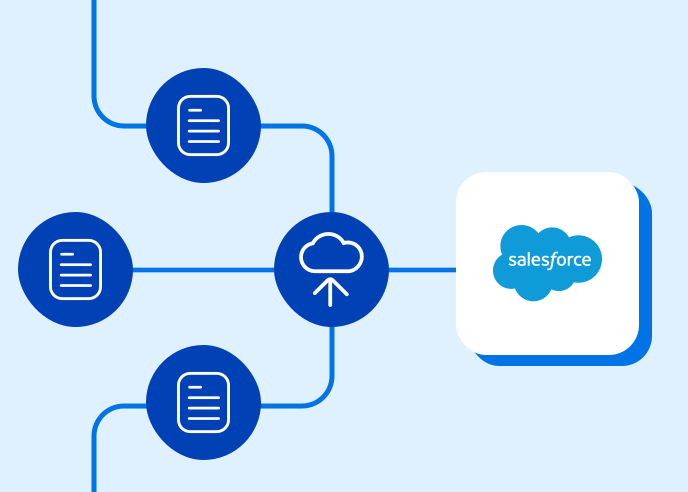
Fillout is a modern form builder focused on data syncing with tools like Airtable, Notion, and Salesforce. Its product suite includes Fillout Forms and Scheduling, Fillout PDF and Workflows, and a database system called Zite.
Where it works well
- Small teams and startups already using Airtable or Notion as their primary data layer
- Low-to-mid volume data collection with straightforward integration needs
FormAssembly vs. Fillout: Where Fillout falls short
Fillout’s response limits at lower tiers mean that organizations with higher-volume data collection needs quickly move into more expensive plans. As a company founded in 2022, Fillout does not carry the compliance certifications or track record that regulated industries require. There is no public documentation of HIPAA, FedRAMP, SOC 2, or similar certifications, which limits its suitability for healthcare, government, financial services, and higher education use cases.
Why organizations choose FormAssembly instead
FormAssembly has been in market since 2006 and carries a compliance portfolio — SOC 2, HIPAA, FedRAMP, DoD IL4 — that regulated organizations require. Its Salesforce integration is one of the deepest in the market, supporting create, update, prefill, and multi-object mapping in a single form submission.
For organizations that need a platform they can trust with sensitive data over the long term, FormAssembly’s track record and certification framework provide confidence that a two-year-old startup cannot yet match.