Address autocomplete looks like a small user-experience feature, but the problem it solves is a data-quality problem that shows up downstream in every process that depends on a correct address: shipping, tax calculation, service area eligibility, and reporting that gets skewed by inconsistent formatting. A respondent typing a free-text address into a form introduces typos, inconsistent abbreviations, and missing unit numbers in ways that autocomplete and structured validation are specifically built to prevent.
What Autocomplete Actually Does
Address autocomplete suggests standardized, verified addresses as a respondent types, pulling from a postal or mapping data source rather than accepting whatever text the respondent enters. This does two things at once: it speeds up form completion, since the respondent selects rather than types a full address, and it standardizes the resulting data into a consistent format before it ever reaches Salesforce, which matters for anything downstream that depends on address fields matching a predictable structure.
What Autocomplete Does Not Fix
Autocomplete improves data quality at the point of entry, but it does not replace validation logic for business rules layered on top of a correct address, such as confirming a service is available in a given territory or that a shipping address falls within a supported region. Those checks need to happen separately, typically through conditional logic that responds to the validated address rather than assuming autocomplete alone covers every downstream requirement.
Why This Matters More for Salesforce-Connected Forms Specifically
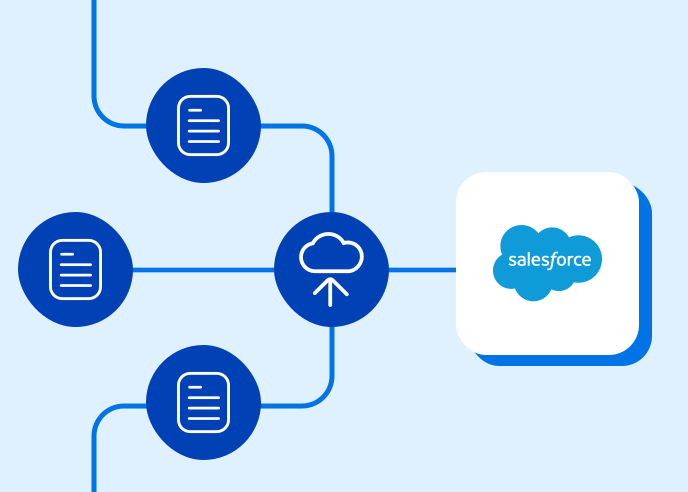
When a form writes directly into Salesforce, inconsistent address data does not just look messy, it breaks deduplication logic, skews territory and routing rules that depend on address fields, and creates downstream cleanup work for whoever owns Salesforce data quality. A form that standardizes addresses before they ever reach Salesforce prevents that cleanup rather than requiring it after the fact.
Where FormAssembly Fits
FormAssembly includes a built-in Address Autocomplete field, powered by the Google Places API, that suggests standardized addresses as a respondent types and populates street, city, state, and postal code fields from the selected result, standardizing address data before it writes into Salesforce.
For deeper validation of addresses, email, and phone numbers, FormAssembly also integrates with Loqate on a form-by-form basis, and conditional logic can apply additional business rules, such as territory or service-area eligibility, based on the standardized address.
Because FormAssembly forms connect directly to Salesforce, clean address data lands in the right fields immediately rather than requiring a separate data-cleansing pass after submission. For organizations where address accuracy affects routing, territory assignment, or reporting downstream in Salesforce, that validation at the point of entry is what prevents the data-quality problem from ever reaching the CRM.
Explore FormAssembly’s Salesforce Integration
Built specifically for Salesforce, FormAssembly gives teams full control to improve data quality, accelerate automation, and support more reliable, AI-driven workflows.