Conga and Nintex both built their Salesforce presence around document generation: turning Salesforce data into contracts, proposals, and renewal notices. Neither product starts with data collection. That division of labor is more useful to understand than to fight, since most renewal and document workflows actually need both halves working together, not one replacing the other.
What Conga and Nintex Are Built to Do
Conga Composer and Nintex both take structured data already in Salesforce and merge it into a document template, a contract, a proposal, or an invoice. That is a mature, well-solved problem for both platforms. Organizations with heavy document output needs, especially in industries with contract-heavy sales motions, often standardize on one of them for exactly that reason.
What neither platform solves natively is getting new or updated data into Salesforce in the first place. A renewal workflow that needs a customer to confirm updated contact information, verify a new payment method, or approve revised terms before the renewal document generates has to collect that update somewhere, and Conga and Nintex are not built as the front door for that collection step.
Where a Form Platform Fits in the Same Workflow
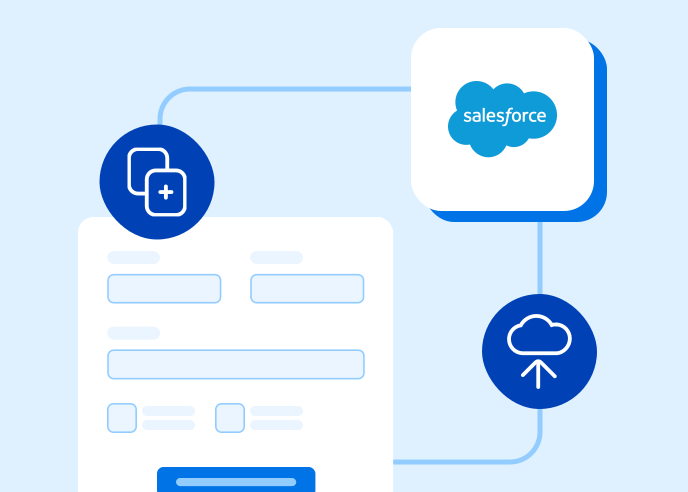
FormAssembly’s role in a renewal or document workflow sits upstream of Conga or Nintex rather than in competition with them. A prefill form pulls the customer’s existing Salesforce record, the person confirms or updates the details that changed, and the submission writes back to Salesforce, at which point Conga or Nintex generates the renewal document from the now-current record. That is the same prefill-to-renewal-email pattern FormAssembly customers already use, extended one step further into the document generation layer. The two categories of tool are solving adjacent problems in the same process: forms handle the update, document generation platforms handle the output.
Where Teams Get the Sequencing Wrong
The common mistake is trying to collect an update inside the document tool itself, either through a fillable PDF sent back and forth by email or through a Conga-generated form that has no conditional logic and no direct write-back to the Salesforce record until someone manually re-keys it. That gap is where renewal workflows lose time, and it is the specific failure mode that pushes revenue operations teams to add a dedicated form step ahead of the document generation step rather than trying to make the document platform do both jobs.
Where FormAssembly Fits
FormAssembly prefill and approvals handle the update and confirmation step that has to happen before a renewal document is accurate, writing the change directly to Salesforce so the document generation tool downstream, Conga, Nintex, or otherwise, is always working from a current record rather than one that is a renewal cycle out of date.
Ready to see what’s possible?
Schedule a personalized demo or request a free trial of the platform to see your use cases in action.