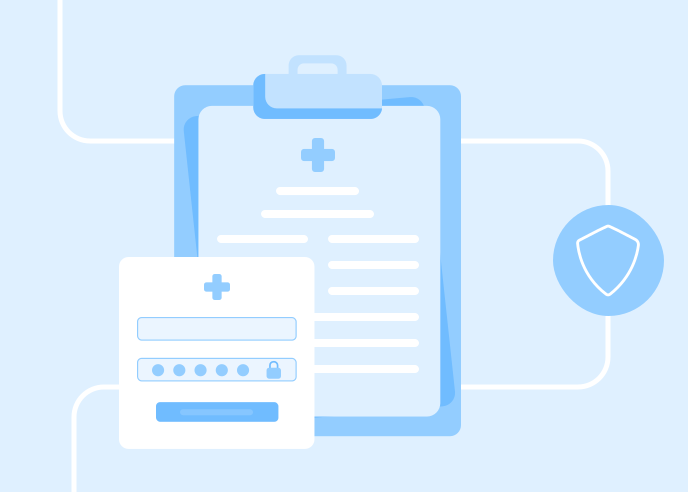
HIPAA compliant mental health intake forms are foundational to both patient trust and clinical outcomes. These forms capture highly sensitive protected health information (PHI), including diagnostic history, trauma disclosures, substance use, suicidal ideation screening, and psychiatric medication history.
Patients share this information with the expectation that it will be handled securely, compliantly, and with appropriate discretion. For healthcare organizations, that means going beyond basic digitization to ensure data is captured, governed, and protected at every stage of the intake process.
While HIPAA provides the baseline, behavioral health organizations must also account for additional requirements such as state-specific privacy laws and 42 CFR Part 2 intake forms regulations. Together, these create a more complex compliance environment than standard healthcare data collection.
What Makes Mental Health Data Different Under HIPAA
Under HIPAA, all PHI is regulated, but mental health data introduces additional considerations, particularly around psychotherapy notes.
The HIPAA Privacy Rule defines psychotherapy notes as documentation that records or analyzes the contents of a counseling session. These notes receive heightened protections:
- They require a separate, specific patient authorization for disclosure
- They cannot be included in general treatment summaries without permission
- They are excluded from the “minimum necessary” standard applied to other PHI
For behavioral health intake forms, this distinction matters. Forms that capture structured data – such as symptom screening, medical history, or demographics – are treated as standard PHI. However, forms that include detailed therapeutic narratives or session-level disclosures may require additional safeguards.
Designing intake workflows with this distinction in mind helps ensure compliance while maintaining appropriate clinical documentation practices.
Accounting for State Mental Health Privacy Laws
HIPAA sets a federal baseline, but most states enforce additional mental health privacy protections. Common requirements include:
- Stricter controls on access to mental health records
- Expanded patient rights to review and amend records
- Additional consent requirements for sharing information with third parties
For organizations operating across multiple states, especially for telehealth providers, intake workflows must align with the laws where the patient is located at the time of service.
This may require:
- State-specific consent language
- Variations in intake form structure
- Additional review processes for sensitive data handling
Legal review is critical before deploying HIPAA compliant mental health intake forms, particularly for organizations serving minors or operating across jurisdictions.
Explore FormAssembly for Healthcare
See how FormAssembly keeps your data collection processes HIPAA-compliant.
Understanding 42 CFR Part 2 for Substance Use Data
If intake forms collect substance use information or support substance use disorder (SUD) treatment, 42 CFR Part 2 intake forms requirements may apply.
Part 2 introduces stricter confidentiality standards than HIPAA:
- Disclosure generally requires explicit patient consent
- Consent must specify the recipient and purpose
- Data cannot be freely shared, even for treatment coordination
For integrated behavioral health practices, this creates additional complexity. Intake forms that include substance use questions must be designed carefully to ensure that data is segmented, protected, and disclosed appropriately based on regulatory requirements.
Designing Intake Forms for Sensitive Clinical Data
The structure and experience of mental health intake forms directly impact both data quality and patient comfort.
Standard intake elements include:
- Presenting concerns
- Psychiatric and treatment history
- Current medications
- Family mental health history
- Trauma history
- Risk screening
The challenge is collecting this information in a way that is clinically useful while minimizing unnecessary disclosure.
Conditional logic plays a critical role. Forms can adapt based on patient responses, ensuring that:
- Patients only see relevant questions
- Sensitive topics are introduced appropriately
- Completion rates improve without sacrificing data quality
For example:
- Patients without prior treatment history are not asked detailed follow-up questions
- Patients without substance use history avoid unnecessary disclosures
Standardized screening tools such as PHQ-9, GAD-7, and Columbia Suicide Severity Rating Scale can also be embedded into forms. With FormAssembly, responses can trigger conditional workflows – such as flagging high-risk scores for immediate clinical review – supporting timely, informed care decisions.
Clear, separate consent language for sensitive disclosures is also essential. Patients should understand exactly what they are agreeing to, especially when sharing mental health or substance use information.
Meeting Technical Requirements for HIPAA Compliance
The HIPAA Security Rule defines the technical safeguards required for mental health PHI compliance, including:
- Encryption of data in transit and at rest
- Role-based access controls
- Audit logging of data access and changes
- A signed Business Associate Agreement (BAA) with technology vendors
For behavioral health organizations, access control is especially important. Intake forms often contain highly sensitive disclosures that should only be visible to authorized clinical staff.
FormAssembly supports these requirements by:
- Providing BAAs for healthcare customers
- Encrypting data in transit and at rest
- Enabling role-based and field-level access controls
- Maintaining audit logs for compliance and reporting
This allows organizations to align intake workflows with the “minimum necessary” standard, ensuring that only the appropriate care team can access sensitive patient information.
Building a Secure and Patient-Centered Intake Process
Effective HIPAA compliant mental health intake forms balance compliance, clinical needs, and patient experience.
By structuring how sensitive data is collected and governed, healthcare organizations can:
- Protect patient privacy and meet regulatory requirements
- Improve data accuracy and completeness
- Support faster, more informed clinical decision-making
- Create a more comfortable and accessible intake experience
A secure, well-designed intake workflow ensures that sensitive behavioral health data is handled appropriately from the first interaction, building trust while enabling high-quality care.
Need help using FormAssembly?
Our Knowledge Base has step-by-step guides to walk you through the platform.