Higher education is in the middle of a data-driven transformation. Institutions are being asked to deliver more personalized, accessible, and student-friendly experiences, often with fewer resources and aging systems behind the scenes.
In a recent webinar with our friends from Coastal and the University of Florida, we explored what it means to embrace responsible data collection in higher education and how colleges and universities can modernize enrollment, student services, and operations without increasing risk or complexity.
Read on for an easy-to-digest recap that breaks down the key ideas, examples, and takeaways covered in the webinar, or watch the full session on demand here.
The Shift: From System-Centered to Student-Centered Data
For years, higher ed institutions built processes around internal systems rather than student needs. Forms, portals, and workflows were often designed to serve databases first and people second.
Today, that approach no longer works. Students expect:
- Fewer logins and less repetition
- Clear, intuitive digital experiences
- Confidence that their data is handled responsibly
Responsible data collection starts by rethinking how data enters your systems, not just where it ends up.
Why Technical Debt is Holding Institutions Back
One of the biggest barriers to progress isn’t a lack of vision – it’s technical debt.
Over time, institutions have accumulated:
- Disconnected tools, originally purchased to solve individual problems
- Custom workarounds that are difficult to maintain
- Manual processes that rely on staff effort instead of automation
The result is fragile infrastructure that’s hard to scale, secure, or adapt. Responsible data strategies help institutions simplify their stack while preserving flexibility.
Responsible Data Collection is About Trust, Not Just Compliance
While compliance (FERPA, accessibility, security standards) is essential in data collection, responsibility goes even further.
Responsible data collection means:
- Asking only for the data you actually need
- Being transparent about why data is collected
- Protecting student privacy across every interaction
- Ensuring equitable access for all users
When students trust how their data is handled, they’re more likely to complete forms, engage with services, and move forward in their journey.
Reducing Friction Without Sacrificing Control
A recurring theme in the webinar was friction reduction.
Small points of friction (such as duplicate questions, confusing forms, and repeated logins) create decision fatigue and form abandonment. But removing friction doesn’t mean lowering standards.
Examples discussed included:
- Single sign-on (SSO) for secure access
- Pre-filling forms with known data to reduce repetition
- Role-based access so staff only see what they need
- Guided workflows that adapt based on student responses
Together, these practices improve completion rates while maintaining strong governance.
Why a Unified CRM Foundation Matters
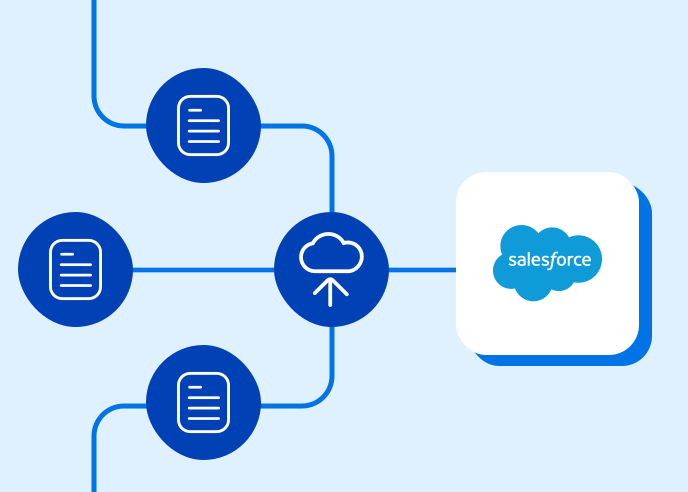
Fragmented tools create fragmented experiences. By centralizing student data in a CRM like Salesforce – and carefully controlling how data flows in – institutions gain:
- A holistic view of each student
- More consistent communication across departments
- Better reporting and decision-making
- Reduced manual data cleanup
Responsible data collection ensures that what enters the CRM is accurate, timely, and trustworthy from the start.
Accessibility and Equity Are Core to Responsible Data Practices
Accessibility isn’t an add-on – it’s a necessity.
The webinar highlighted real-world scenarios where inclusive data collection makes a measurable difference, including:
- Disability services workflows that protect sensitive data
- Flexible forms that adapt to individual needs
- Accessible design that supports all users
When data collection is inclusive by design, institutions can better support equity across the student lifecycle.
Key Takeaways
- Responsible data collection in higher education starts at the point of entry, not in reporting or storage.
- Reducing friction improves outcomes, but only when paired with strong governance.
- Technical debt is a major blocker to modernization.
- Trust, transparency, and accessibility are essential to student engagement.
- Centralized CRM strategies work best when data quality is prioritized upstream.
Moving Forward: Start Small, Think Strategically
Modernization doesn’t require ripping out every system at once. Many institutions start by improving how just one workflow collects and manages data, then expand from there. By focusing on responsibility, simplicity, and student experience, higher ed teams can make meaningful progress even under tight budgets and staffing constraints.