Collecting clean, structured data starts with strong inputs, and increasingly, that means knowing how to guide AI with intentional, high-quality prompts. For many teams, this shift represents a real opportunity: the chance to move faster without giving up accuracy, compliance, or control.
Manual processes still dominate many data workflows and slow teams down. In fact, 98% of teams relying on manual data collection report inefficiencies, losing more than 10 hours each week to repetitive tasks as a result. These tasks include form creation, field mapping, validation, routing, and quality checks – all of which take time away from higher-value work.
The good news? The introduction of Agentic AI in the data collection process changes this.
From Manual Tasks to Connected Automation
Form building has traditionally been the slowest part of the data lifecycle. Designing layouts, configuring logic, securing approvals, and coordinating with technical teams can stretch what should be a simple project across days or weeks. And once a form is live, the work continues: routing data, managing integrations, reviewing for errors, and repairing inconsistencies.
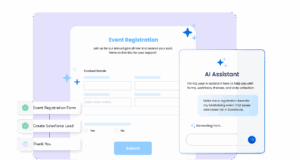
With FormAssembly Atlas, powered by Fai, these steps become part of a connected, AI-assisted workflow rather than a sequence of manual tasks.
With a single, clear prompt, Fai can:
- Generate a fully branded, compliance-ready form
- Apply layout rules and field types automatically
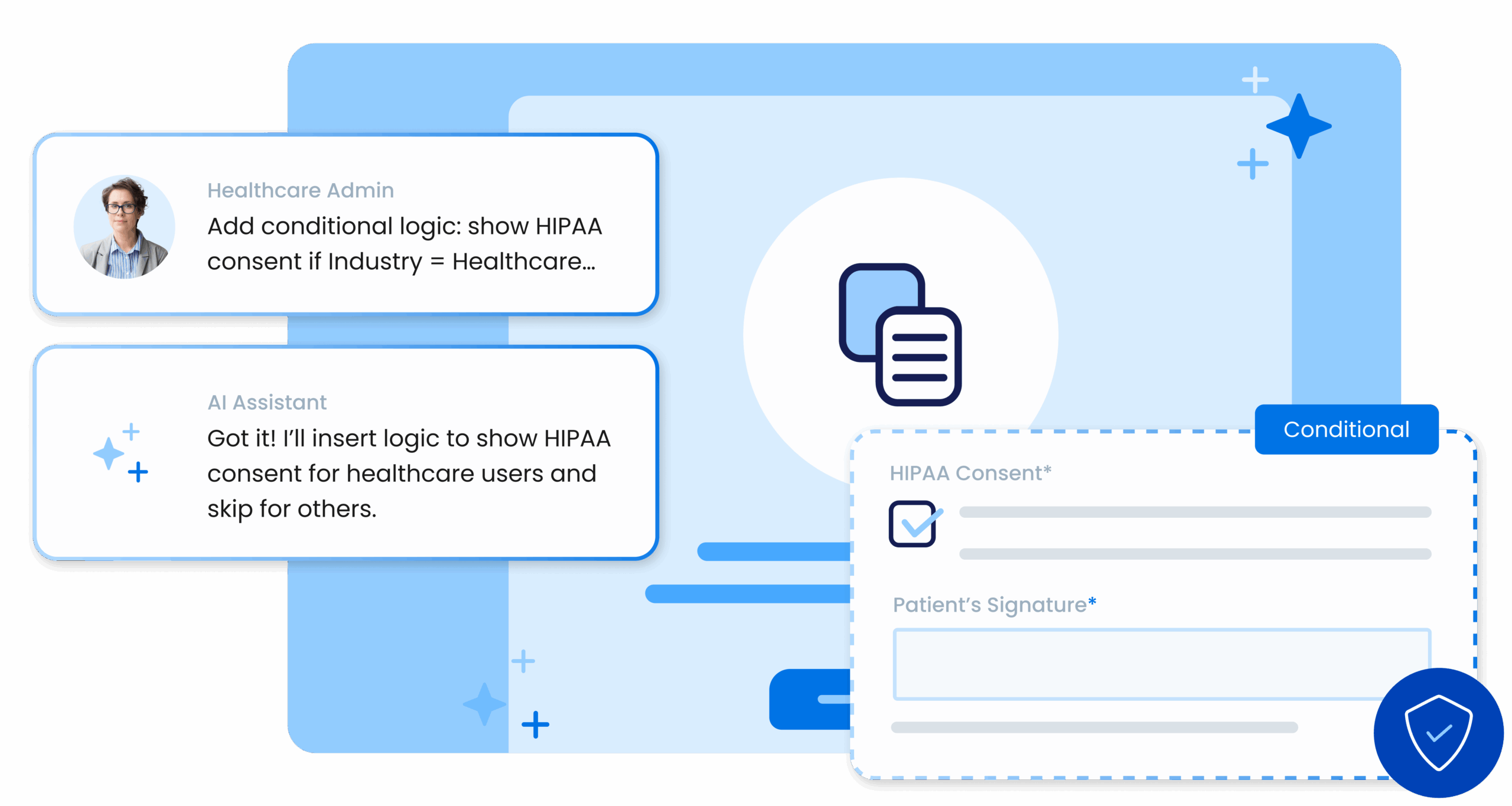
- Build logic, branching, and calculations
- Prepare integration-ready structure for systems like Salesforce
- Route data cleanly and securely
- Preserve downstream reporting consistency
The result: forms and workflows that would normally take days can be created in minutes – all with full transparency and user control.
AI Accelerates the 7 Stages of the Data Workflow
AI enhances every step of data collection, automation, and management, including:
- Requirements Gathering: Give AI context and it will provide you with best practices, workflow templates, and compliance considerations.
- Form Building: AI can instantly generate a branded, compliant form from a prompt, document, or spreadsheet.
- Integration & Data Transfer: AI is capable of configuring secure integrations, mapping data fields, and ensuring clean data handoffs to your CRM.
- Routing & Orchestration: Use AI to generate workflows that adapt based on inputs and enable automation triggers.
- Distribution & Data Collection: AI can customize form delivery based on audience and optimize form presentation for higher response rates.
- Data Analysis & Reporting: AI can analyze your data to automatically surface key insights and generate custom reports.
- Process Optimization: AI is able to continuously monitor workflow efficiency, detect friction points, and implement real-time improvements.
By improving the prompts you give AI, teams can set themselves up for cleaner, more complete, and more reliable outputs. Every downstream step becomes easier when the form and logic are built optimally from the start.
Why Prompt Quality Matters
The difference between a prompt that is too vague and a “good” prompt usually comes down to how the prompt is written.
AI doesn’t fill in missing context, so when given vague requests, vague results are the return. But when teams provide structured direction, outputs improve dramatically, often reaching 80–90% completion on the first attempt.
There is a simple formula you can follow to ensure that your prompts are as effective as possible: Action + Details + Context.
- Action = What you want AI to do
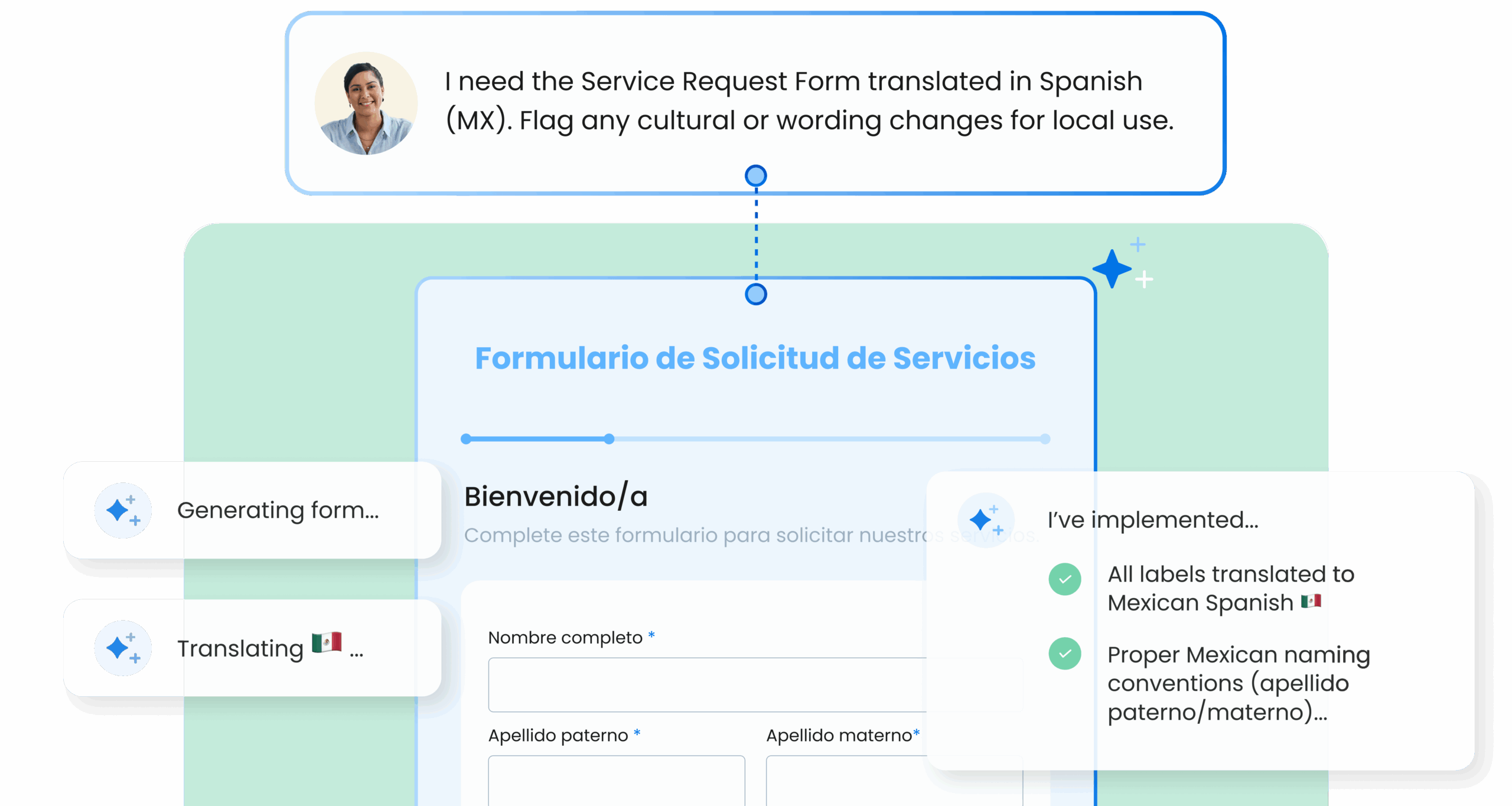
- Details = Your field, logic, layout, formatting, and compliance needs
- Context = The audience you’re trying to reach, purpose, and downstream systems you need connected
Combining these three key factors within your prompt will guide AI toward precise, trustworthy results.
Example Prompts
Here is an example of a vague prompt that won’t yield useful results and a “good” prompt that will provide AI with what it needs to perform optimally.
Vague prompt: “Build me a form.”
- This prompt has no fields indicated, no purpose mentioned, and no structure. With a prompt like this, AI will invent what it thinks you need, not what you’re actually looking for.
Good prompt: “Create a job application form with five required fields: name, email, resume upload, LinkedIn profile, and position dropdown.”
- With a prompt like this, AI knows the context for the form it is creating and the exact fields it needs to generate.
Want to review more prompt examples? Download the Better Prompts, Better Outcomes eBook.
How Atlas and Fai Put Better Prompts Into Practice
In FormAssembly Atlas, Fai is able to analyze your intent, apply requirements across layout, logic, data structure, and integration, and present an editable result that you still fully control.
This approach ensures you:
- Maintain compliance without extra steps
- Prevent inconsistent or messy data
- Minimize rework and revision cycles
- Capture cleaner data from the beginning
- Move significantly faster while staying hands-on
AI doesn’t replace your judgment. It accelerates it.
Get the full guide
For a deeper breakdown of the seven stages of the data workflow, the prompt formula, and step-by-step examples, download the complete eBook: Better Prompts, Better Outcomes.
Want to learn more about FormAssembly Atlas? Book a personalized demo or start a free trial today.